Original BallSheet Explained: Big Balls, Browser Version, and BallSheetOGL
A clear guide to the original BallSheet browser game, the Big Balls name, why ball sheet game searches get mixed results, and which version you should play.

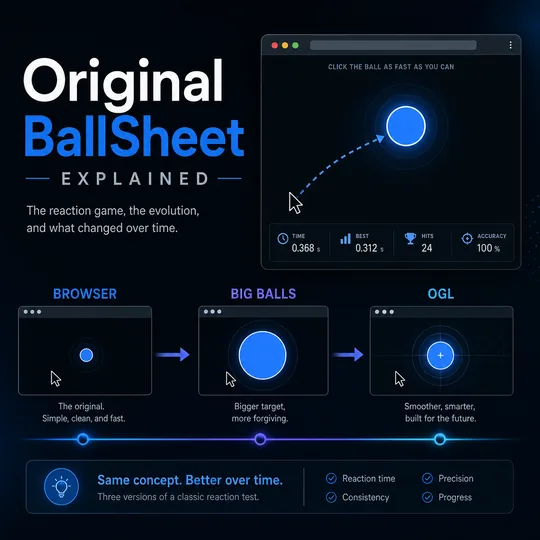
The original BallSheet story is easier to understand when the browser version, Big Balls name, and OGL remake are separated clearly.
Quick Answer
The original BallSheet is the minimalist browser reaction game associated with the dphdmn BallSheet project. Search data shows that many people phrase the intent as ball sheet game, but that wording also triggers baseball score sheets, classroom ball games, and unrelated sports pages. Use this page when you need the game identity, Big Balls naming, browser path, and BallSheetOGL difference in one place.
Contents
What Searchers Usually Mean by Original BallSheet
When someone searches for what is the original BallSheet, they are usually not looking for a generic ball sheet, a sports score sheet, or a printable worksheet. They are trying to identify the real game behind several similar names: BallSheet, BallSheet Big Balls, BallSheet BB, the browser version, and BallSheetOGL.
The confusion is understandable. BallSheet is a small, fast browser reaction game rather than a large commercial title with a polished official history page. Search results often show GitHub repositories, playable mirrors, short descriptions, and community mentions. Those pages are useful, but they do not always explain the relationship between the original project and later playable or remake versions.
The practical answer is simple: treat BallSheet by dphdmn as the original reference point, treat BallSheet Big Balls as the commonly visible browser-game title, and treat BallSheetOGL as a separate remake for players who want a native OpenGL implementation. This distinction prevents the most common mistake: comparing every version as if it were the same build with identical input behavior and scoring context.
If your goal is simply to play the BallSheet web game, use the BallSheet online homepage. This guide keeps the narrower original-version intent: project identity, Big Balls and BallSheet BB naming, and the boundary between the browser build and BallSheetOGL.
What Is the Original BallSheet?
The original BallSheet is a minimalist reaction and aim game. The core loop is intentionally direct: move the cursor into a target ball, trigger the next target, keep scoring, and survive as pressure increases. The challenge comes from timing, movement control, and consistency rather than a large rule set.
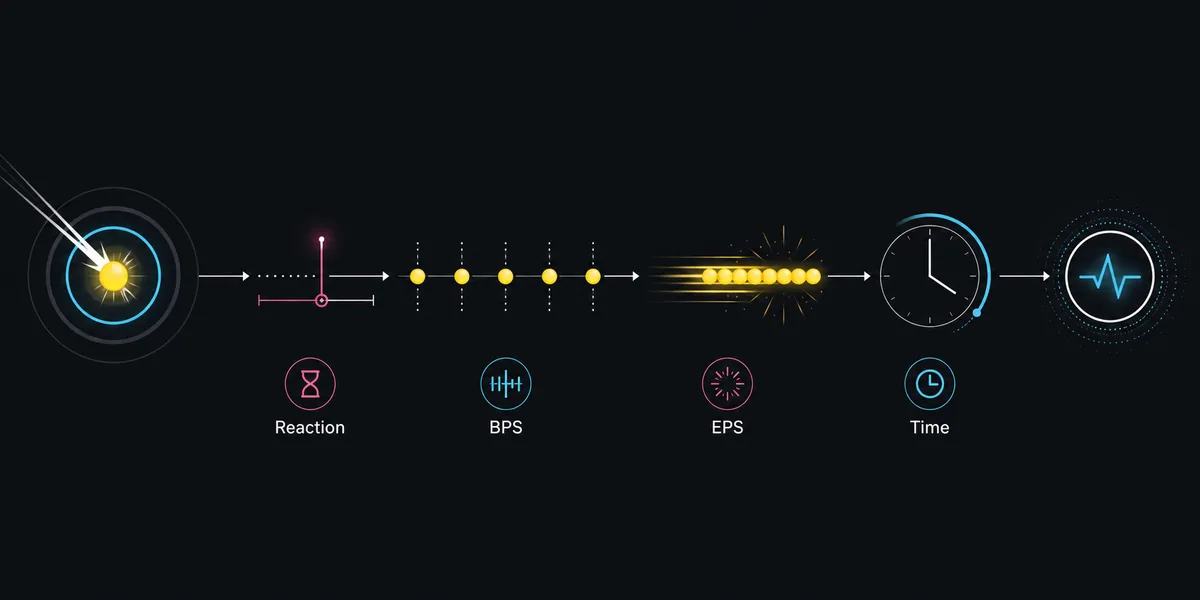
In the browser version, the player starts with a score buffer. Successful target hits add score, while the game drains score over time. Longer runs become harder because the pressure builds. If the score drops below zero, the run ends and the results screen shows performance stats such as time survived, average reaction, balls eaten, balls per second, and eat-per-second values.
This makes BallSheet different from a pure click-speed test. A click-speed test usually rewards repeated clicking in place. BallSheet asks you to react to changing target positions and move cleanly across the canvas. A very short reaction can be impressive, but stable movement over many targets is usually more valuable for a strong run.
For source context, the original project can be checked on the dphdmn BallSheet GitHub repository. That repository is a better factual reference than random reposts because it points back to the project identity rather than only the playable embed.
When you record a BallSheet score, label it as a browser run or an OGL run. The number is useful for personal progress only when the version and conditions stay comparable.
How BallSheet Big Balls Fits In
BallSheet Big Balls is the name many players encounter when they load a playable browser version. In search behavior, it often acts as a shorthand for the same reaction-game experience. Some users shorten it further to BallSheet BB.
For SEO and user clarity, it is useful to separate naming from version identity. If a player asks for BallSheet Big Balls, they probably want the browser game. If a player asks for the original BallSheet, they probably want to know whether Big Balls is the same thing, a fork, or a later remake. The answer is that Big Balls is best treated as a browser-page title or variant name connected to the BallSheet experience, not as a completely separate genre or unrelated game.
This also helps with the ambiguous query ball sheet. Without the combined name, search engines may mix the game with printable sports forms, bowling score tools, school worksheets, or other unrelated pages. Using the exact spelling BallSheet and adding context such as “reaction game” or “browser version” makes the search intent much clearer.
Browser BallSheet vs BallSheetOGL
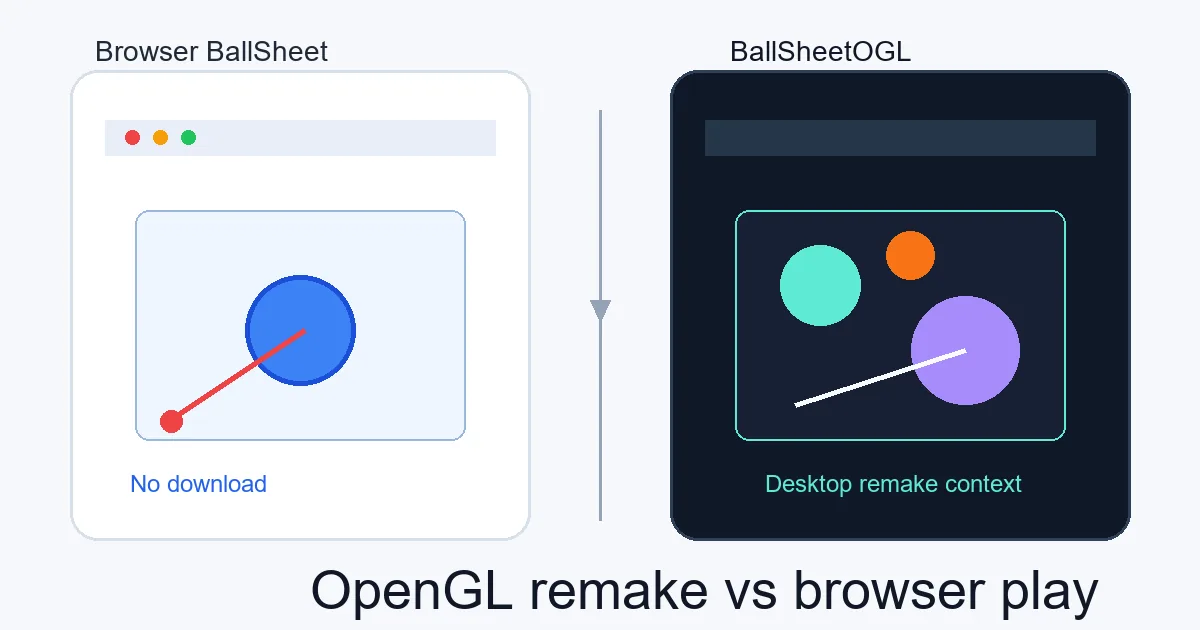
The most important version comparison is not Big Balls versus BallSheet. It is browser BallSheet vs BallSheetOGL. BallSheetOGL is a C++ OpenGL remake, and that means it is not just the same web page running somewhere else. Native rendering, input handling, optional settings, and local performance can change how a run feels.
The BallSheetOGL repository describes it as a remake of the original BallSheet project. It can be useful for desktop players who want a native build and more control, but scores should be interpreted carefully. A browser canvas and a native OpenGL program can differ in cursor behavior, frame timing, and responsiveness. Even when the scoring idea is similar, the play environment is not identical.
You can review the remake context on the BallSheetOGL GitHub repository. When explaining records, runs, or practice results, specify which version you used. “Browser BallSheet run” and “BallSheetOGL run” are clearer than simply saying “my BallSheet score.”
For browser controls and focus, see the BallSheet Web guide.
| Version | Best For | Access | Score Context |
|---|---|---|---|
| Original browser BallSheetJavaScript browser game reference point | Understanding the core game and playing instantly | Runs in the browser | Best compared with other browser-version runs |
| BallSheet Big BallsVisible browser title/name variant | Players searching by the name shown on the playable page | Runs in the browser through the playable page | Usually part of the browser-version context |
| BallSheetOGLC++ OpenGL remake | Desktop players who want a native remake | Requires a desktop build or download workflow | Do not treat scores as directly identical to browser scores |
Do You Need to Download BallSheet?
If your goal is to play BallSheet online, you do not need a download. The browser version can run directly from a web page, and the fastest path is the BallSheet Online homepage. That page is designed for the play intent: open the game, read the controls, understand score pressure, and start a run.
If your goal is to try BallSheetOGL, then the answer changes. BallSheetOGL is a native OpenGL remake, so it belongs in a download or build-from-source context. That can be appropriate for technical users, but it is unnecessary for players who only want the original browser-style experience.
This distinction matters because BallSheet download is an easy query to misunderstand. Some searchers use “download” because they assume every game needs an installer. For BallSheet, the browser version does not. Only the remake path pushes you toward a local program.
Which Version Should You Play?
Most players should start with the browser version. It is the cleanest match for the original BallSheet search intent, it requires no installation, and it makes the basic rule set immediately obvious. If you are new, play several short runs first before worrying about variants, records, or desktop remakes.
Choose BallSheetOGL only if you specifically want the OpenGL remake, want to experiment with desktop settings, or are comparing implementation differences. That is a valid use case, but it is a different purpose from simply asking “what is the original BallSheet?”
For practice, compare your own runs within one version. Browser runs should be compared with browser runs. OGL runs should be compared with OGL runs. Mixing them can create misleading conclusions because small input and rendering differences matter in a reaction game.
Recommended Path
Start with the browser BallSheet page, learn the controls, then read version notes only if you care about the original project or BallSheetOGL. This keeps the play experience simple while still giving enough context for players who want the history.
Why “Ball Sheet Game” Search Results Get Confusing
Similarweb keyword generator data for ball sheet game shows a weak phrase-match set and related terms such as baseball score sheets, school ball games, team ball games, and skee ball. Those candidates have informational intent, but they do not match the BallSheet reaction game closely enough to deserve separate coverage on this page.
That means the safest optimization is not to chase every “ball” query. This page uses those terms only as disambiguation: BallSheet is a browser reaction game, not a paper score sheet, not a school activity list, and not a traditional arcade ball game. If your search result looks like printable forms or sports equipment, add BallSheet, Big Balls, browser reaction game, or OGL to the query.
The current page match is strongest for original BallSheet, BallSheet Big Balls, BallSheetOGL, and ball sheet game users who clearly mean the online reaction game. Broader sports, baseball, school, and skee ball intent should be treated as unrelated or future-site research, not folded into this guide.
FAQ
References
Last updated: August 12, 2026
Play BallSheet Online